Загрузка ...



Piling Installation for Lakes, Rivers, Marinas, and Coasts
Piling installation changes from one waterfront environment to another. A private dock on a freshwater lake, a pier on a river, a commercial marina, and a coastal shoreline structure may all require different pile types, depths, equipment, and support plans.
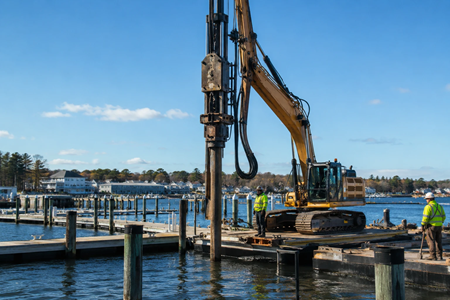
The water body is one of the first details that should guide the project.
Waterfront owners can see the project scope here when planning pile driving for docks, piers, boardwalks, bulkheads, boat lifts, marinas, and shoreline reinforcement structures.
The same pile material does not fit every location. Freshwater lakes may allow practical wood pile solutions for private docks. Commercial marinas may require steel H-piles for heavier load support. Gulf Coast saltwater areas may call for concrete supports or other durable systems. Sensitive soils may make helical piles a practical option.
Regional conditions also matter. Soil type, water depth, storm exposure, access, and structure load vary across Texas, Louisiana, Oklahoma, Arkansas, Mississippi, and Alabama. A pile system should be designed for the actual site, not copied from a different type of shoreline.
Lakefront piling installation
Lakefront projects often involve private docks, piers, boat lifts, and residential waterfront access. On lakes, pile installation must account for water level changes, soft bottom areas, boat wake, and the type of structure the owner wants to build.
Wood piles can be suitable for private piers and docks on freshwater lakes when site conditions support that choice. They blend with natural surroundings and can provide reliable support for residential use when installed correctly.
Lake projects can still be complex. Shallow areas may require careful equipment positioning. Soft soils may require deeper penetration. If the structure includes a boat lift, the pile system must be designed for more load than a simple walking dock.
- Private docks — lakefront docks need stable piles that support everyday walking, boarding, and light waterfront use.
- Boat lifts — lift systems add load and require stronger pile planning than a basic platform.
- Water level changes — pile height and deck elevation should account for seasonal changes where they occur.
- Soft lake bottoms — weak soils may require deeper installation to reach dependable support.
Riverfront piling installation
Riverfront conditions can differ from lakefront conditions because current, bank shape, and changing water levels may be more important. A river structure may need to resist movement from flowing water and debris, depending on the site.
Piers, docks, and shoreline structures along rivers should be planned around soil stability and water movement. The pile system must support the structure while also handling lateral forces that may occur during higher water levels or stronger current.
Access can be more difficult on river sites, especially where banks are steep or soft. Equipment may need to work from the shore or from the water depending on the layout. Early access planning helps avoid delays once construction begins.
Commercial marina and boat lift support
Commercial marinas and heavy boat lifts place greater demands on piles than small private docks. They may support larger vessels, repeated use, wider platforms, and heavier framing. In these situations, steel H-piles may be needed because of their high load-bearing capacity.
The pile system for a marina should be planned as part of the full layout. Slip spacing, walking surfaces, utility routes, mooring points, and lift locations can all affect where piles should be installed.
Commercial structures also need durable connections and consistent alignment. A small error in pile placement can create problems when installing framing, decking, or boat lift equipment. Vertical accuracy and spacing are important.
- Define vessel loads — the size and weight of boats influence pile type, spacing, and depth.
- Plan the marina layout — pile locations should match slips, access routes, lift systems, and structural framing.
- Review soil strength — commercial loads often require stronger bearing support than residential structures.
- Choose installation equipment — hydraulic hammers, vibro-drivers, or drilling rigs may be needed depending on soil and access.
- Protect long-term function — the pile system should support repeated daily use, not only initial construction.
Coastal piling installation
Coastal properties face exposure that can be more demanding than inland lake or river sites. Saltwater, storms, stronger waves, and aggressive environmental conditions can affect material choice and installation planning.
Concrete supports may be used in coastal saltwater areas where corrosion resistance and durability are important. Steel H-piles can also be used for heavy structures, but corrosion protection and site-specific design must be considered.
Coastal projects may need deeper piles because of water depth, weak soils, or higher structural loads. They may also require work from the water when shoreline access is limited or when the structure extends far from land.
For Gulf Coast areas, pile selection should be connected to the full shoreline system. A dock, pier, boat lift, seawall, or bulkhead may all depend on pile support that can handle aggressive conditions over time.
Planning across different service regions
Waterfront construction across Texas, Louisiana, Oklahoma, Arkansas, Mississippi, and Alabama includes many different water bodies and soil types. Lakes, rivers, bayous, coastal bays, and marina sites all create different support requirements.
Texas projects may include lake areas, Greater Houston, Gulf Coast waterfronts, river areas, and cities such as Houston, Katy, Sugar Land, Missouri City, Pearland, and Baytown. Louisiana projects may include silty soils and Gulf Coast conditions. Oklahoma and Arkansas often include lake and river settings. Mississippi and Alabama may include Gulf Coast and inland lake conditions.
Because the conditions vary so much, piling installation should begin with a site-specific plan. The contractor should review the structure type, soil, water depth, access, and load before choosing a pile type or installation method.
A pile system that fits the water body gives the finished structure a better foundation. Whether the project is a private lake dock, a river pier, a commercial marina, or a coastal shoreline reinforcement, the support below the surface should match the environment above it.