Загрузка ...


The ArchViz Productivity Paradox: Scaling Quality Without Burning Out
In 2026, the ArchViz industry is caught in a paradox: clients demand photorealism and shorter turnaround times simultaneously. The days of spending a week modeling a single sofa or sculpting complex foliage are long gone.
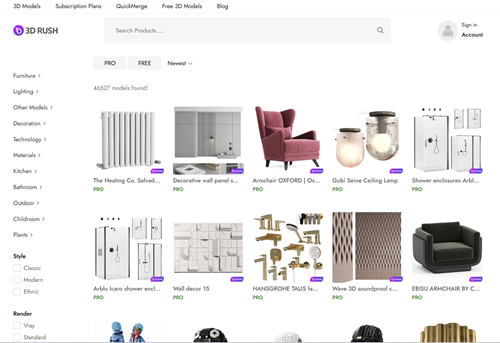
To remain competitive, visualization studios must shift from a «creation-first» to a «curation-first» mindset. The professionals thriving in this high-pressure environment are those who leverage trusted ecosystems like 3D Rush to streamline their production pipelines.
Technical Precision is Non-Negotiable High-end rendering engines like Corona and V-Ray are incredibly powerful, but they are only as good as the geometry you feed them. A common mistake in professional workflows is relying on unverified assets that lead to shading artifacts, broken UVs, or excessive polygon counts that crash the viewport. This is why seasoned designers prioritize high-quality 3D models for 3ds Max that are specifically optimized for architectural visualization. Clean topology isn’t just about making the file look good; it’s about ensuring that light interacts naturally with surfaces, producing those subtle reflections and shadows that separate a «CG render» from a «photograph.»
The Economics of Scaling When you run a studio, your most expensive resource is your artists’ time. Paying a high-level 3D artist to model mundane assets is a significant drain on project margins. The smartest way to scale is to move away from individual asset purchases and adopt a scalable, flexible approach. By utilizing a professional 3D asset subscription, teams can instantly access thousands of ready-to-render objects without the administrative friction of invoicing for every single file. This creates a predictable budget and ensures that your artists have the creative freedom to swap out furniture, lighting fixtures, or vegetation on the fly to meet client feedback without delaying the project deadline.
The Future is Curated The most successful ArchViz projects of 2026 will be defined by their artistic composition, not by the technical labor behind them. By building a library of high-fidelity, verified assets, you are essentially setting up a «construction kit» that allows you to focus on what matters: the lighting, the mood, and the narrative. As rendering technology moves toward real-time solutions, the demand for optimized, high-performance models will only grow. Those who invest in their asset library today are the ones who will define the visual standards of the industry tomorrow.